Can I Build an Annexe in My Garden?
Perhaps you'd like a parent or relative to live closer to you. If so, your first question is probably a simple one:
can I actually build an annexe in my garden?
In most cases, yes. Most UK gardens have room for a one- or two-bedroom annexe. Councils also see annexes for family members all the time. And you often won't need full planning permission. Many annexes, including most of ours, go in under a Certificate of Lawfulness instead.
This guide explains the routes and what makes a garden suitable. It also covers where things get trickier, so you know where you stand.
The short answer
You can usually put an annexe in your garden if:
- It sits within the grounds of your home (planners call this the "curtilage")
- A family member uses it as part of your household, not as a separate home to sell or let
- There's space for the building and a way to get it in
- You can run water, power and drainage to it
If your garden ticks those boxes, an annexe is very likely possible. The next question is which permission route suits it.
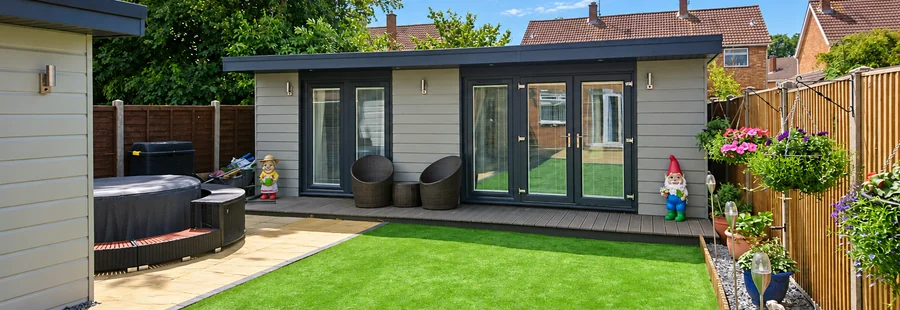
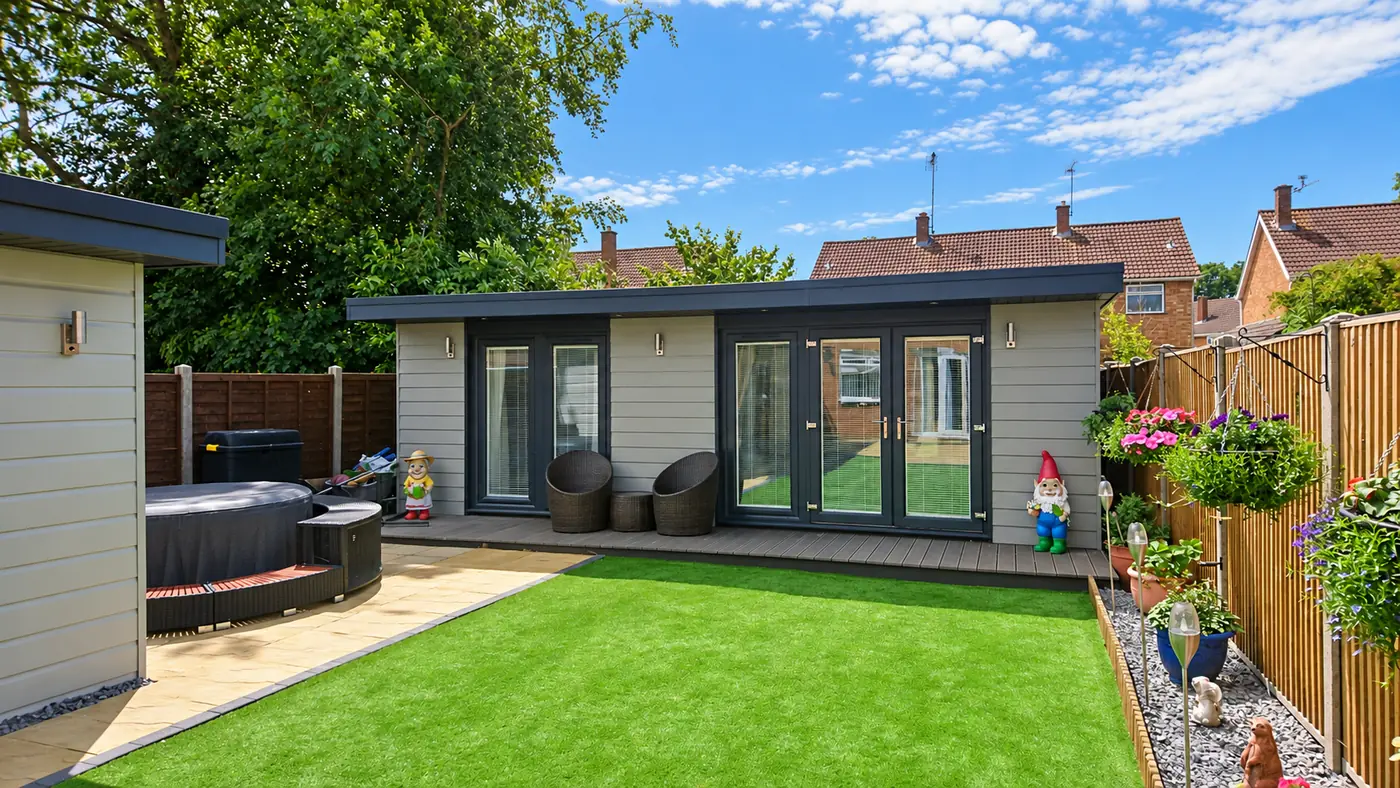 This annexe in Farnborough fits neatly into an ordinary back garden.
Do I need planning permission for a garden annexe?
People often hear mixed messages here. That's because there are two quite different routes. For the full detail, see our guide:
do granny annexes need planning permission?
Route 1: a Certificate of Lawfulness (the caravan route)
UK law treats some annexes as caravans. If your annexe meets the legal definition, you can place it in your garden and live in it as part of your household. You don't need a full planning application.
Instead, you ask your council for a
Lawful Development Certificate, often called a Certificate of Lawfulness. It's formal proof that your plans are lawful.
To qualify, the annexe has to meet the caravan definition. In broad terms, that means:
- It stays within set limits for length, width and inside height
- It is manufactured in no more than two sections, which are reassembled on site
- You could move it in one piece, so it can't sit on fixed foundations
- It's part of your household, not a separate home
Most Green Room annexes take this route. They sit on ground screws but don't fix to them. We also design in a crane-lifting scheme, so you could move the annexe in one piece in future. That's exactly what the caravan rules ask for. Read more in our
guide to the Caravan Act and granny annexes.
Don't let the word "caravan" put you off, though. Inside, these are warm, fully insulated homes with a proper kitchen and bathroom.
 A caravan-compliant annexe in Reigate. It looks and feels like a permanent home.
Route 2: a householder planning application
Some annexes don't meet the caravan definition. For example, they may be larger, sit on fixed foundations or join onto the house. These need planning permission, like any other building. The council will look at:
- How the annexe sits in your plot, and its size next to your home
- Whether it suits the look of the area
- Any effect on neighbours, such as overlooking, loss of light or noise
- Whether your household will really use it alongside the main house
Annexes often get planning permission. However, it usually takes longer, and the council may ask for design changes.
What about garden rooms and Permitted Development?
You may have read that garden buildings don't need planning permission. That's often true for garden rooms, offices and summerhouses, thanks to Permitted Development rules. But those rules don't cover a building someone lives and sleeps in. So for an annexe, it's either a Certificate of Lawfulness or planning permission.
Is my garden suitable?
Every plot is different. Still, a few practical points decide what's possible.
Space
You'll need room for the annexe plus some space around it. That leaves room for upkeep, a path to the door and a nice view. A good one-bedroom annexe fits in more gardens than people expect. Our annexes are bespoke, so we shape the layout around your plot. We don't squeeze in a standard model.
 This L-shaped annexe in Bexley was designed around the shape of the plot.
Access
Our team puts every annexe together on site. So we need a practical way to bring the team and materials into your garden. Narrow side paths and steps are common, and they're rarely a problem. Just mention them early on.
[caption id="attachment_3610" align="alignnone" width="1000"]
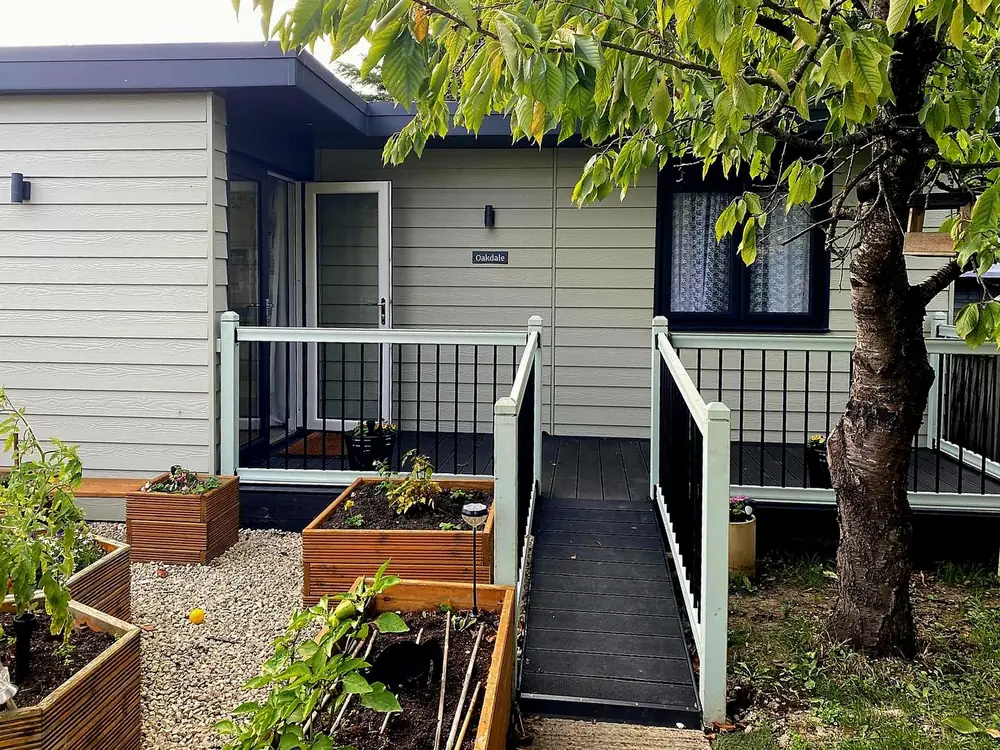
A gentle ramp and decking make this annexe easy to reach on foot.[/caption]
A gentle ramp and decking make this annexe easy to reach on foot.
Ground
Ground screws work on most types of ground, slopes included. They avoid the mess of concrete foundations. They also keep the annexe moveable, which matters for the caravan route.
 Our team fitting ground screws. There is no concrete, and the annexe stays moveable.
Utilities
An annexe needs water, power and drainage. These usually run from the main house. So the distance from the house, and where your drains run, will affect the best spot.
When can it be harder?
Most annexes go ahead without problems. But a few situations need more care:
- Conservation areas, National Parks and Areas of Outstanding Natural Beauty: councils look more closely at how the annexe looks and where it sits
- Listed buildings: anything in the grounds of a listed building needs extra thought
- Using it as a separate home: you may plan to let it, sell it or give it its own address, parking and garden. If so, councils treat it as a new house, which is much harder to get approved
- Leasehold homes and covenants: check your deeds or lease, whatever the council says
None of these rules an annexe out. They just mean it's worth getting advice first.
How The Green Room helps
We've built garden buildings for over 20 years. For the last 12, we've focused on annexes. We make every annexe in the UK and design it around your family and your garden.
Our prices cover the complete, installed annexe, not just the building. So you know where you stand from the start.
Your complete, installed annexe. One fixed price. No hidden extras.
Not ready to talk yet? That's fine. When you enquire, we first email you our layouts, specs and "from" prices. You can then look through them at home, in your own time. There are no pushy sales calls.
Find out
how much a garden annexe costs. You can also read about
granny annexes for elderly parents. Or
get in touch and tell us about your garden.
Frequently asked questions
Can I build an annexe in my garden without planning permission?
Often, yes. Your annexe may meet the legal definition of a caravan and be part of your household. In that case, you can usually apply for a Certificate of Lawfulness instead. It's still a formal step with your council, so don't skip it.
How long does a Certificate of Lawfulness take?
Councils aim to decide within eight weeks. However, times vary from area to area.
Can my relative live in the annexe full time?
Yes. In fact, that's why most of our customers buy one. The key is that the annexe stays part of your household. It shouldn't become a completely separate home.
Can I rent out a garden annexe?
Letting it as a separate home usually needs planning permission for a new house. That's much harder to get. So if you plan to rent it out, talk to us and your council first.
Will an annexe affect my council tax?
It can, depending on who lives there. For example, an annexe for a dependent relative often gets a discount or exemption. Check with your council to be sure.
Do you install annexes across the UK?
We install annexes across England and Wales.
Back to Blog