Can a SIPs Granny Annexe Get a Lawful Development Certificate?
Over 100 SIPs Annexe Approvals Later, the “Movability” Myth Still Won’t Die
You may have seen claims online that
SIPs (Structural Insulated Panel) granny annexes cannot obtain a
Lawful Development Certificate (LDC) because their construction makes it difficult to demonstrate that the annexe can move from one place to another.
Our experience shows otherwise.
Since 2020, we have secured
more than 100 Lawful Development Certificates for SIPs-built annexes across England and Wales.
During the past ten years, local planning authorities have refused only two of our LDC applications. We took one refusal to appeal, where the inspector upheld the council's decision, while we did not appeal the other at the customer's request.
As a result, we have extensive first-hand experience of designing
SIPs granny annexes for different lawful development routes and preparing the technical and planning evidence that local planning authorities require.
Crucially, however,
not every Lawful Development Certificate involves a test of movability. This distinction matters because much of the confusion surrounding SIPs annexes comes from mixing two different legal principles.
Lawful Development Certificates and Movability: Two Different Tests
In England,
Class E permitted development rights allow certain buildings within the curtilage of a house without a full planning application, provided the proposal meets the relevant restrictions and serves a purpose incidental to the enjoyment of the dwellinghouse. Wales has
separate permitted development legislation, with its own
Class E provisions and limitations for buildings within the curtilage of a dwellinghouse.
However, Class E does not provide a general permitted development right to create a separate, self-contained home in the garden.
Importantly,
Class E does not require the building itself to be movable. Instead, the applicable permitted development conditions and limitations, together with the proposed use of the building, determine whether a structure qualifies under Class E.
The correct route depends on the annexe's design, intended use and relationship with the main house. We explain the different options in our guide to
granny annexe planning permission. A different legal test applies when a granny annexe needs to meet the statutory definition of a caravan. You can read more about the size, use and mobility requirements in our guide to the
Caravan Act and granny annexes.
Under this route, movability does matter.
The
Caravan Sites and Control of Development Act 1960 defines a caravan as a structure designed or adapted for human habitation that can move from one place to another. The
Caravan Sites Act 1968 also extends the definition to qualifying
twin-unit caravans, which manufacturers can construct in no more than two sections and assemble together on site.
This is where claims about SIPs construction become relevant, but also where they can become misleading.
The argument takes the movability requirement associated with the statutory definition of a caravan and turns it into a much broader claim that
SIPs granny annexes cannot obtain a Lawful Development Certificate because they cannot demonstrate movability.
Our experience demonstrates that this is not the case.
SIPs Granny Annexe LDC Approvals Across England and Wales
Our experience doesn't rely on a single planning decision. We have secured Lawful Development Certificates for
SIPs-built annexes across numerous local authority areas in England and Wales.
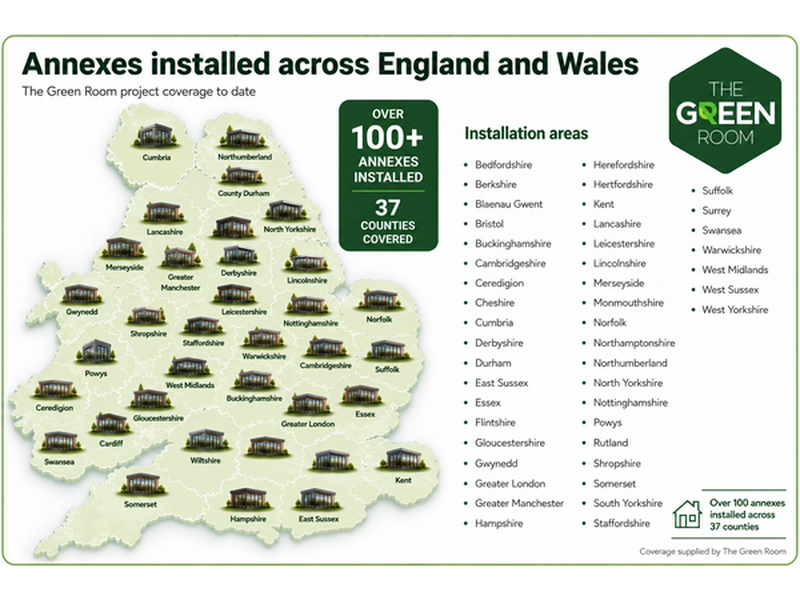
Our reach also extends well beyond the two examples below. To date, The Green Room has installed
more than 100 garden annexes across 37 counties and areas in England and Wales, giving us practical experience across a wide range of local planning authority areas.
Among these projects, two provide particularly useful examples because they directly address the question of
SIPs construction and movability.
Flintshire, North Wales
Flintshire County Council granted a Certificate of Lawful Development for a SIPs-built twin-unit annexe designed to meet the statutory definition of a caravan.
In this case, we didn't simply add SIPs as insulation around a separate structural frame. Instead, the
Structural Insulated Panels formed the structure of the annexe itself, including the walls, floor and roof.
We designed and manufactured the annexe in two sections and then
assembled the two sections on site. Its SIPs construction did not prevent us from demonstrating the characteristics required of a qualifying twin-unit caravan.
Great Yarmouth, Norfolk
Great Yarmouth Borough Council also granted a Certificate of Lawfulness for a separate SIPs-built annexe where the proposal relied on the statutory caravan definition.
This gives us an important second example from a different planning authority in a different part of the country.
For both projects, our engineers produced detailed evidence to demonstrate how we could lift and move the SIPs structures. This included
structural calculations, wind-loading assessments and dedicated crane lifting schemes, all specifically designed around the SIPs construction.
Significantly, these weren't lightweight structures with SIPs added simply as insulation. The
SIPs formed the structural walls, floor and roof, while our engineers designed the annexes to satisfy the relevant movability requirements.
Two different local planning authorities — one in England and one in Wales — granted Certificates of Lawfulness for SIPs-built annexes under the statutory caravan route.
In both cases, SIPs construction did not prevent us from demonstrating movability.
These decisions provide practical evidence against the suggestion that SIPs construction makes an annexe inherently unsuitable when it needs to demonstrate movability.
And these aren't isolated examples. We have used the same fundamental design and engineering principles across
more than 100 successful Lawful Development Certificate applications for SIPs-built annexes since 2020.
Where an annexe doesn't meet the statutory caravan criteria, full planning permission may provide the appropriate alternative. Our
two-bedroom Maidstone granny annexe, for example, followed the full planning route because its width exceeded the caravan limit.
Can SIPs Annexes Meet the Caravan Act Movability Test?
Yes. With the right design and engineering, a SIPs annexe can meet the statutory requirements that apply to a twin-unit caravan.
What matters isn't simply whether a manufacturer uses SIPs, timber frame or another construction system.
Instead, the finished structure must meet the relevant legal tests, and the applicant must provide sufficient evidence to demonstrate this to the local planning authority.
Where an application needs to demonstrate movability, the design and engineering of the structure become particularly important.
Depending on the project, we can provide supporting evidence that includes
structural calculations, wind-loading assessments, construction drawings and a dedicated crane lifting scheme.
Our experience demonstrates that
SIPs construction does not, by itself, prevent a granny annexe from satisfying these requirements.
Can a SIPs Granny Annexe Get an LDC?
Yes. SIPs construction does not, by itself, prevent a granny annexe from obtaining a Lawful Development Certificate.
The important point is identifying which legal and planning test applies to the proposed annexe.
Under Class E permitted development rights, the test does not include movability. Where a proposal instead relies on the statutory definition of a caravan, the structure must satisfy the relevant caravan requirements, including the applicable test of movability.
That's where careful design and engineering evidence become particularly important.
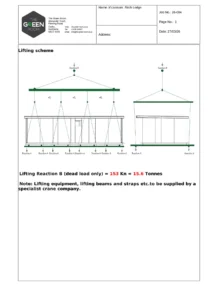
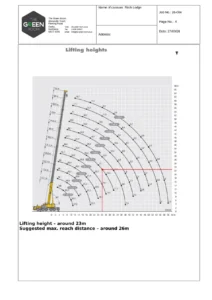
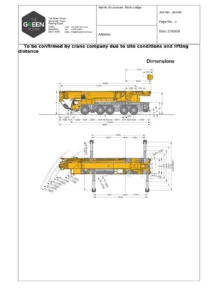
We have successfully designed SIPs annexes under the caravan route in both England and Wales. For relevant projects, our engineers have produced
structural calculations, wind-loading assessments and crane lifting schemes to demonstrate how we can lift and move the completed structure.
Together with our wider record of
more than 100 successful LDC applications for SIPs-built annexes since 2020, these projects demonstrate an important point:
SIPs construction and movability are not incompatible.
If you're considering an annexe, you can also see
how our granny annexe process works, from the initial site survey and bespoke design through to planning, installation and handover.
Frequently Asked Questions
Can a SIPs granny annexe get a Lawful Development Certificate?
Yes.
SIPs construction does not itself prevent a granny annexe from obtaining an LDC. The design, proposed use and planning route determine which legal test applies.
Does a SIPs granny annexe have to be movable?
Not in every case. Movability becomes relevant when the annexe relies on the
statutory definition of a caravan. Class E permitted development rights do not include a general movability requirement.
Can a SIPs annexe meet the caravan movability test?
Yes. With the right design and engineering, a SIPs annexe can meet the relevant movability requirements. Depending on the project, we can support the application with
structural calculations, wind-loading assessments and a crane lifting scheme.
Can The Green Room handle the Lawful Development Certificate application?
Yes. We can assess your proposed annexe and site, identify the appropriate planning route and prepare and submit the
Lawful Development Certificate application where appropriate.
Sources
Planning a garden annexe? Get in touch to discuss your project or arrange your complimentary site survey.
Back to Blog