


Granny Annexe vs Care Home: An Honest Look at the Pros and Cons
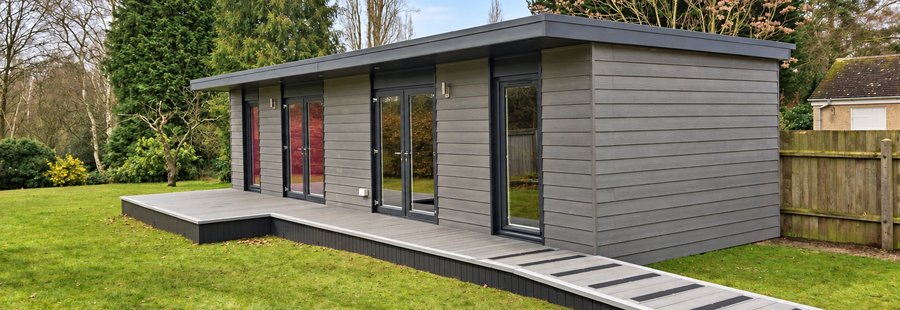
For many families, a granny annexe costs less than two years of care home fees and keeps a loved one close. But it is only the right answer when their care needs can be safely met at home.
Deciding where an ageing parent should live is one of the hardest conversations a family has. It is emotional, it is expensive, and it often has to happen quickly after a fall or a hospital stay.
We build granny annexes, so we are not neutral. That is exactly why we want to be straight with you. Below we compare a granny annexe vs a care home honestly: the genuine pros and cons of both, the real 2026 costs, and the questions that will help you decide.
We have faced this decision in our own family too. You can read about it in Granny Annexe vs Care Home: Our Family's Experience.
What does each option cost in 2026?
Self-funded residential care in England now averages about £1,298 a week, or roughly £67,500 a year; nursing care averages £1,535 a week (carehome.co.uk). Fees are higher in London and the South East, where residential care averages £1,548 a week.
A granny annexe is a one-off cost. UK annexes typically range from around £52,000 to £155,000 or more (The Garden Room & Annexe Guide). To compare fairly, we have added the cost of some paid help at home: 10 hours a week at around £30 an hour.
| Option | After 1 year | After 3 years | After 5 years | Asset left? |
|---|---|---|---|---|
| Residential care home (£1,298/week) | £67,496 | £202,488 | £337,480 | No |
| Nursing home (£1,535/week) | £79,820 | £239,460 | £399,100 | No |
| £80,000 annexe + 10 hrs/week home care | £95,600 | £126,800 | £158,000 | Yes, the annexe stays |
The annexe figure is an example only. See how much a garden annexe costs for what a complete, installed Green Room annexe costs. If care needs grow, home care hours and costs will rise too, so the gap can narrow.
The pros of a residential care home
A good care home offers round-the-clock professional care, which is something no family can easily match at home.
- 24-hour care and supervision. Trained staff are always on hand, including at night, which matters for falls, wandering or frequent personal care.
- Nursing and specialist care. Nursing and dementia homes have registered nurses and staff trained in complex needs.
- Regulated and inspected. Homes in England are inspected and rated by the Care Quality Commission (CQC), so you can check standards before choosing.
- Company and activities. Residents can socialise every day, with organised activities, meals and outings.
- Relief for family carers. Relatives can go back to being a son or daughter rather than a full-time carer.
- No building work. There is nothing to design, approve or install; a place can sometimes be found within days.
The cons of a residential care home
The biggest drawback is cost: fees run indefinitely and leave nothing behind.
- High, ongoing fees. At £60,000–£80,000 a year, savings can disappear quickly, and fees usually rise each April.
- The family home may be sold. If your relative's savings and assets are over £23,250 in England, they pay in full, and their house is usually counted once they move in permanently (carehome.co.uk).
- Loss of independence. Set mealtimes, shared spaces and routines can be hard for someone used to their own front door.
- Distance from family. Visits depend on opening times and travel, and the right home may not be close by.
- Unsettling for some people. A move to unfamiliar surroundings can be distressing, particularly for people living with dementia.
- Variable quality. Standards differ widely between homes, so careful research and visits are essential.

The pros of a granny annexe
An annexe lets your relative keep their own home and independence, a few steps from the people who love them.
- Independence with support nearby. Their own front door, kitchen and bathroom, with family close enough to help at a moment's notice.
- A one-off cost, not a monthly bill. Once it is paid for, there are no weekly fees, just everyday living costs.
- An asset that stays with the family. Unlike care fees, the annexe remains on your property and can be used for years to come.
- Flexible for the future. Later it can house a returning adult child, a guest or a carer, or become a home office or studio, subject to planning conditions.
- Possible council tax exemption. An annexe lived in by a dependent relative aged 65 or over is usually exempt from council tax (Ealing Council).
- Familiar surroundings. Grandchildren, pets, the garden and family meals all stay part of everyday life.
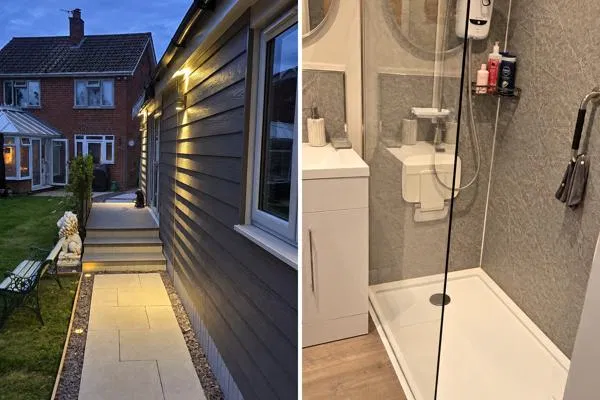
- Designed around their needs. Level access, wider doorways, walk-in showers and grab rails can be built in from the start.
- Usually no full planning application. Annexes built to the legal definition of a caravan can often be installed under a Lawful Development Certificate rather than full planning permission.
The cons of a granny annexe
An annexe is a home, not a care service, and that is its main limitation.
- It does not provide care. If your relative needs help with washing, dressing or medication, you will need to arrange home carers, and their costs add up.
- Needs can outgrow it. Advanced dementia or round-the-clock nursing may eventually mean a care home is still needed.
- Pressure on the family. Living close by can quietly turn relatives into unpaid carers. Talk honestly about who will do what.
- A large upfront sum. You need £50,000 or more available at the start, from savings, the sale of your relative's home or finance.
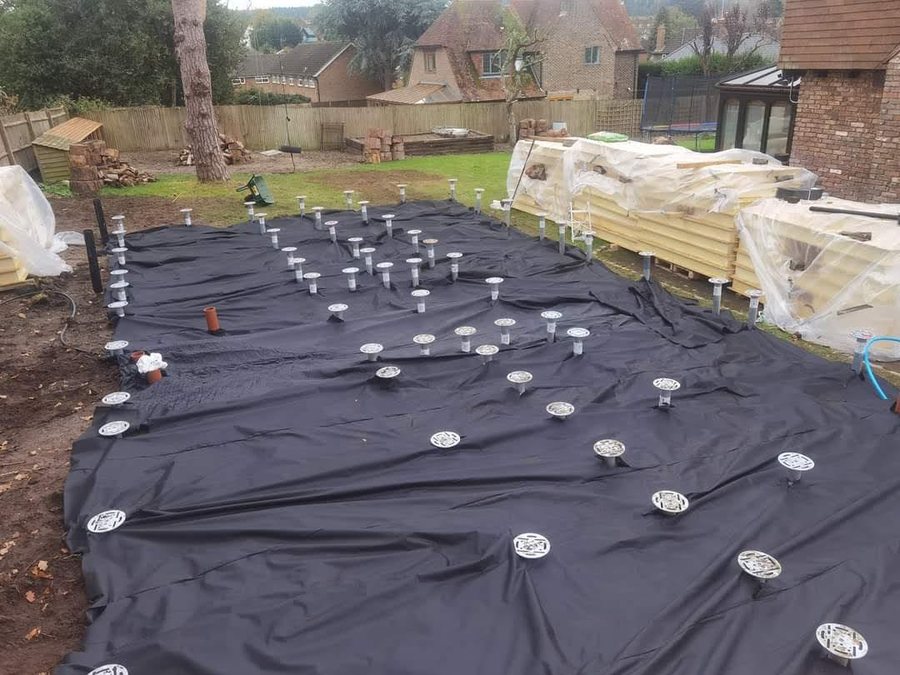
- You need the space. Your garden must be big enough, with access for installation and connections to water, drainage and electricity.
- Lead time. Design, the Lawful Development Certificate and the build take weeks or months, so it suits planning ahead rather than a crisis.
- Quality varies. Some cheap annexes leave out foundations, connections or installation. Always check exactly what the price includes.
Money and legal points to check first
A few rules can change the sums significantly, so take advice before you commit.
- Care funding thresholds. In England, anyone with assets over £23,250 pays their care fees in full; below £14,250 the council pays most of the cost. In Wales the limit is £50,000 for residential care. These limits have been frozen in England since 2010.
- Council tax. An annexe is often banded separately. It is exempt if a dependent relative (65 or over, or substantially disabled) lives there as their main home, and a 50% discount can apply for other relatives (Warrington Council).
- Deprivation of assets. If a parent gives away money to fund an annexe, a council may later treat it as if they still have it when assessing care fees. Get advice on how the purchase is structured.
- Ownership and inheritance. If a parent contributes to an annexe on their child's land, agree in writing who owns what, and update wills accordingly.
- Planning. Check whether your annexe will need a Lawful Development Certificate or full planning permission before you order.
This article is general information, not legal or financial advice. Speak to a solicitor or a specialist later-life financial adviser about your own situation.
Which is right for your family?
The right choice depends mainly on your relative's care needs today and how they are likely to change.
| A granny annexe may suit you if… | A care home may be better if… |
|---|---|
| Your relative is largely independent or needs a few hours of help a week | They need care or supervision day and night |
| They want to keep their own space and routine | They need nursing or specialist dementia care |
| Family can be nearby and willing to help | Family cannot realistically provide day-to-day support |
| You have a suitable garden with access | There is no space or access for an annexe |
| You are planning ahead rather than reacting to a crisis | A safe place is needed within days |
Many families use both in sequence: an annexe for the independent years, with a care home later only if it becomes necessary.

Frequently asked questions
Is a granny annexe cheaper than a care home?
Usually, over time. An annexe is a one-off cost, while care home fees average about £67,500 a year for residential care in England. Allow for home care costs too if they are needed.
Do you pay council tax on a granny annexe?
Not if a dependent relative aged 65 or over lives in it as their main home. Other family members may qualify for a 50% discount.
Do I need planning permission for a granny annexe?
Not always. Annexes built to the legal definition of a caravan can often be installed with a Lawful Development Certificate instead.
Can carers visit someone in an annexe?
Yes. Home care agencies visit annexes just as they would any other home.
What happens to the annexe later?
It stays on your property and can be used by other family members or as extra space, within any planning conditions.
Talk it through with The Green Room
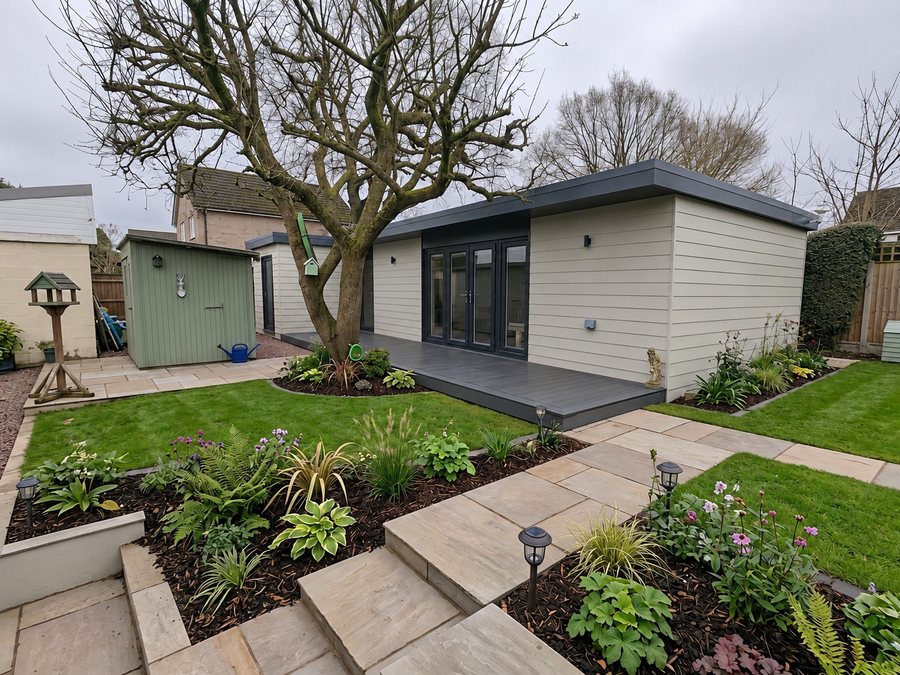
We have specialised in granny annexes for 12 years, building bespoke, UK-made annexes across England and Wales. Every price covers the complete installed project. Your complete, installed annexe. One fixed price. No hidden extras.
If you are weighing up an annexe against a care home, we are happy to talk through what would work in your garden, with no pressure.
Or email us at info@the-green-room.co.uk.
Sources
- Care home fees and costs, carehome.co.uk
- Jointly owned property and care home fees, carehome.co.uk
- What is a garden annexe?, The Garden Room & Annexe Guide
- Class W annexe exemption, Ealing Council
- Annexes and council tax, Warrington Council
Back to Blog